- Map the material loss
- Collect exposure and pour records
- Assess the remaining substrate
Reddit discussions identify questions; technical guidance comes from the linked primary sources. This article is not a site inspection or an engineered specification. How we research.
Begin with what is coming off
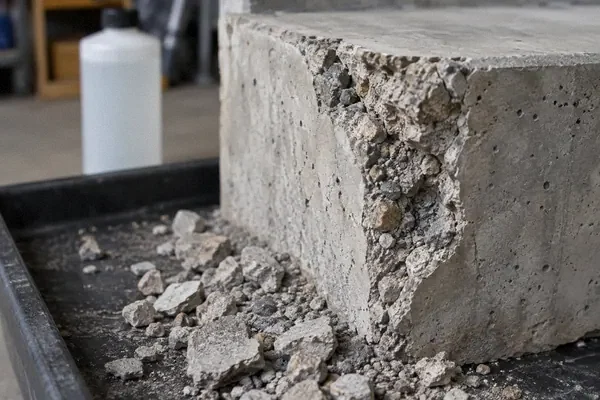
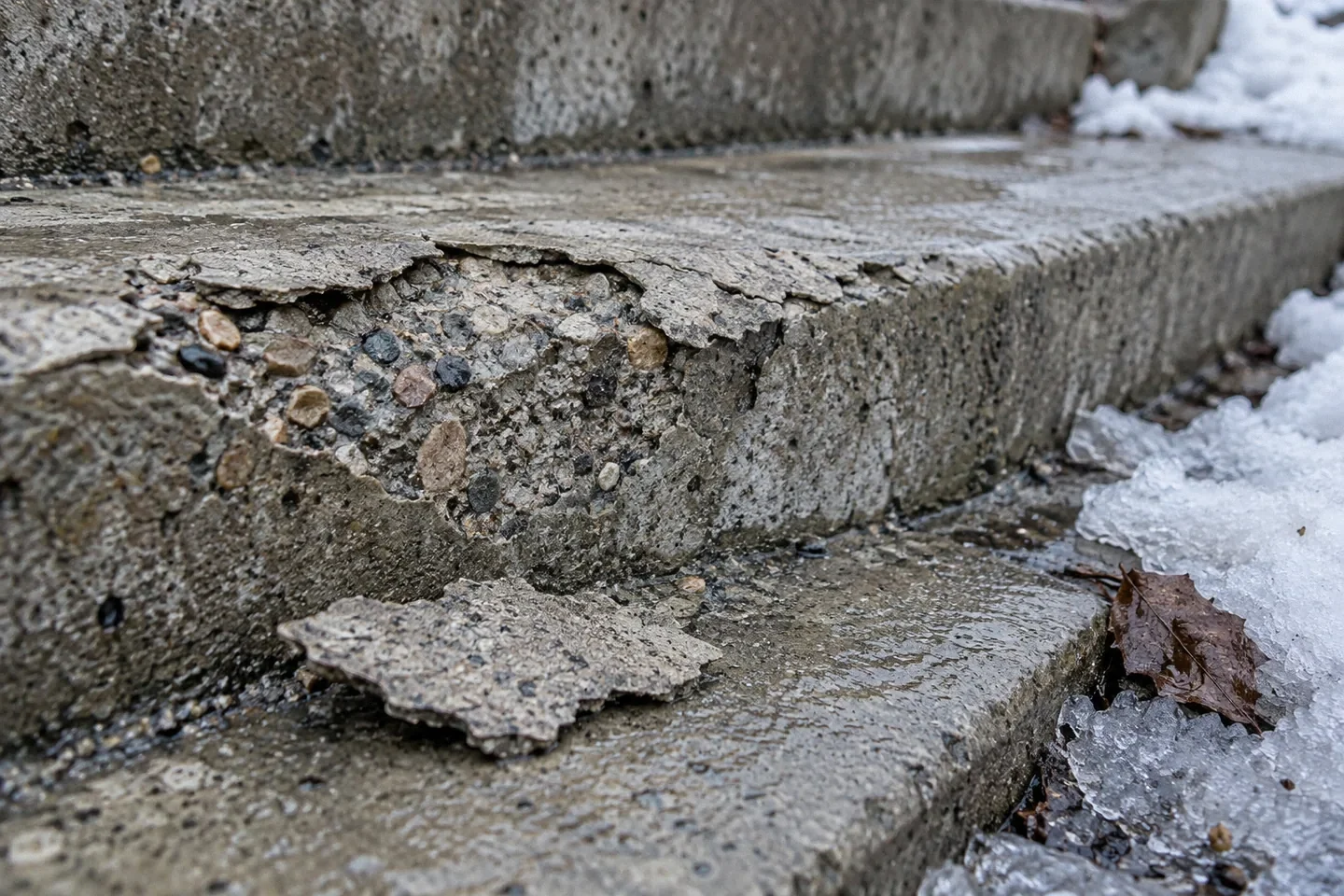
The words scaling, spalling and crumbling are often used interchangeably in homeowner conversations. Start with a plain description: thin flakes are lifting, small pits are appearing, or larger pieces are breaking away. Include the size of the affected area and whether it is expanding. This helps the evaluator determine which condition needs investigation without relying on a label chosen from a photograph.
A Reddit owner of a young driveway disputed a builder's salt explanation. The owner compared the damaged driveway with nearby concrete and questioned whether limited exposure could explain it. That is a legitimate question to investigate, but neither the comparison nor the comments establish causation for that installation.
Use the correct exposure context
NRMCA CIP 2, Scaling Concrete Surfaces focuses on surface loss associated with freezing and thawing and notes that peeling can also occur without those conditions. This distinction matters for readers in warmer regions. Do not import a northern driveway diagnosis into a Florida patio simply because both surfaces are flaking.
Document actual exposure rather than regional assumptions. Record whether the area froze, whether deicing products were applied or carried in by vehicles, and whether water regularly remained on the surface. If the information is unknown, say so. A previous owner's maintenance habits may not be recoverable.
The construction history also matters. Request available placement, curing and material records. The evaluator should explain how the known exposure and construction facts relate to the observed damage, while identifying any uncertainty that would require further examination.
Map patterns that can guide the assessment
Photograph the entire slab and mark affected zones. Is damage concentrated in wheel paths, around a drain, near a joint or under a regularly parked vehicle? Does it follow a particular placement boundary? Pattern information can suggest where to look, but it should not be treated as proof that the nearest visible activity caused the damage.
Include unaffected areas in the record. An adjacent slab may differ in age, finish, materials, treatment or exposure even when it looks similar. Comparing it can be useful, but it is not a controlled experiment. Ask which differences need to be accounted for before using the comparison to support a conclusion.
If fragments have already detached, photograph them with scale and their original location if known. Do not deliberately chip away large areas yourself to estimate severity. A repair contractor may need to determine the extent of unsound material in a controlled way.
Separate diagnosis from responsibility
The technical question is what condition exists and what likely mechanisms explain it. The responsibility question depends on the contract, care instructions, actual work and evidence. Keeping them separate makes the conversation more productive. A contractor can explain a plausible exposure mechanism without thereby proving that no construction factor contributed.
Similarly, a homeowner can document early deterioration without proving that the mix was defective. Avoid accusations that outrun the evidence. Ask for a written assessment stating what is observed, what cause is considered likely, what supports that view and what remains unresolved.
If the condition is extensive or disputed, an independent evaluation may be appropriate. Define the question the evaluator is being asked to answer. A useful report should do more than repeat that concrete can deteriorate; it should connect findings to the particular installation and repair decision.
What determines whether repair is feasible?
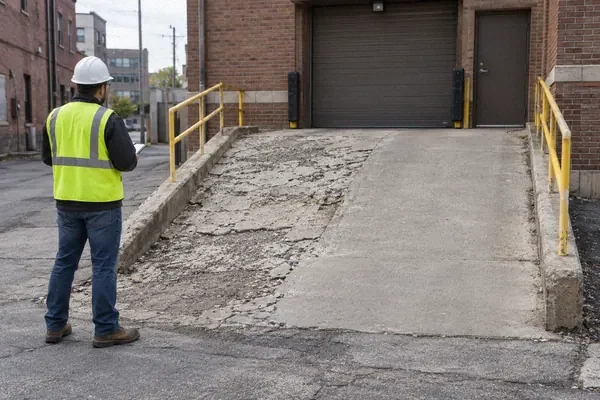
The remaining substrate is central. A bonded repair needs suitable concrete beneath it; simply covering loose material does not establish a durable bond. NRMCA's scaling guidance discusses this limitation. Ask how the contractor will determine the depth and area of removal and how unexpected damage will affect the scope.
Also ask whether the deterioration is progressing. A repair priced around today's visible patches may be incomplete if surrounding areas are becoming unsound. A treatment plan should explain whether it addresses isolated damage or a broader surface condition.
For a proposed resurfacer, consult its exact requirements. The ARDEX CD technical data is one example of product-specific preparation and substrate limits. Do not assume that every thin repair system can address every depth or exposure.
Bring a decision checklist to the review
- What material is failing, and how deep is the affected layer?
- Is the condition localized or progressing across the slab?
- Which exposure facts are documented?
- Which construction records are available?
- Is the remaining concrete suitable for a bonded repair?
- What continuing exposure must the repair withstand?
- What appearance and maintenance should be expected?
Ask the contractor to distinguish included work from assumptions. This is especially important when preparation may expose more damage than is visible initially.
A hypothetical driveway comparison
Imagine a hypothetical driveway with flakes concentrated near parked vehicles after winter. The owner assumes road residue is the sole cause. A site review considers that exposure but also checks surface soundness elsewhere and reviews the installation history. If apparently unaffected areas are also weak, the repair scope may need to extend beyond the visible wheel paths.
In a separate hypothetical warm-climate patio, similar-looking peeling occurs without freezing. The reviewer should consider a different mechanism rather than applying the same explanation. The visual similarity does not make the exposure histories interchangeable.
Ask for an evidence-based scope
The next useful step is a documented assessment and a repair proposal matched to the actual substrate. Avoid both automatic replacement and a promise that a sealer will stop all deterioration. Establish the extent, likely mechanism and continuing exposure first. Then compare monitoring, local repair, resurfacing or replacement on the conditions each option can actually address.
Related questions
Does salt exposure prove the homeowner caused the damage?
No. Exposure is one part of the evidence and does not by itself establish responsibility or exclude other contributors.
Can flaking happen where concrete never freezes?
Yes, surface peeling can have other mechanisms. Do not apply a freeze-thaw explanation automatically to a warm-climate slab.
Research references
- primary · full
NRMCA CIP 2 - Scaling Concrete Surfaces - primary · search-excerpt
ARDEX CD Technical Data - reddit · search-excerpt
Concrete driveway spalling after less than 1 year