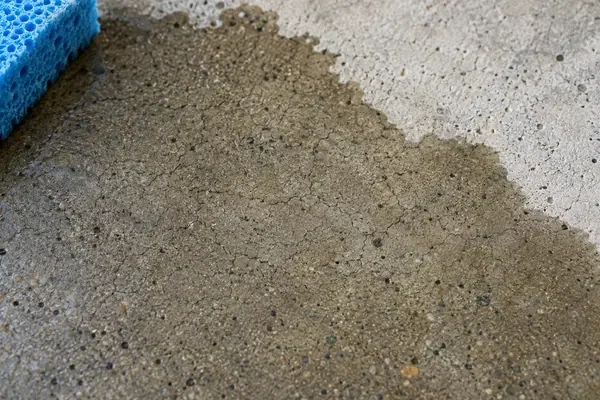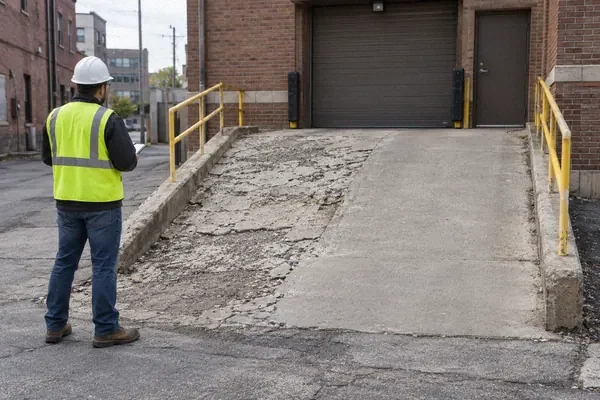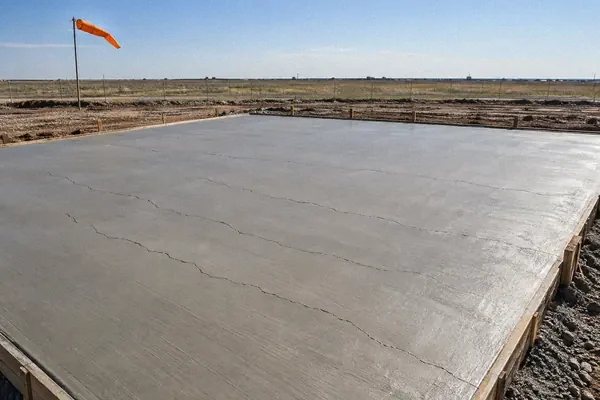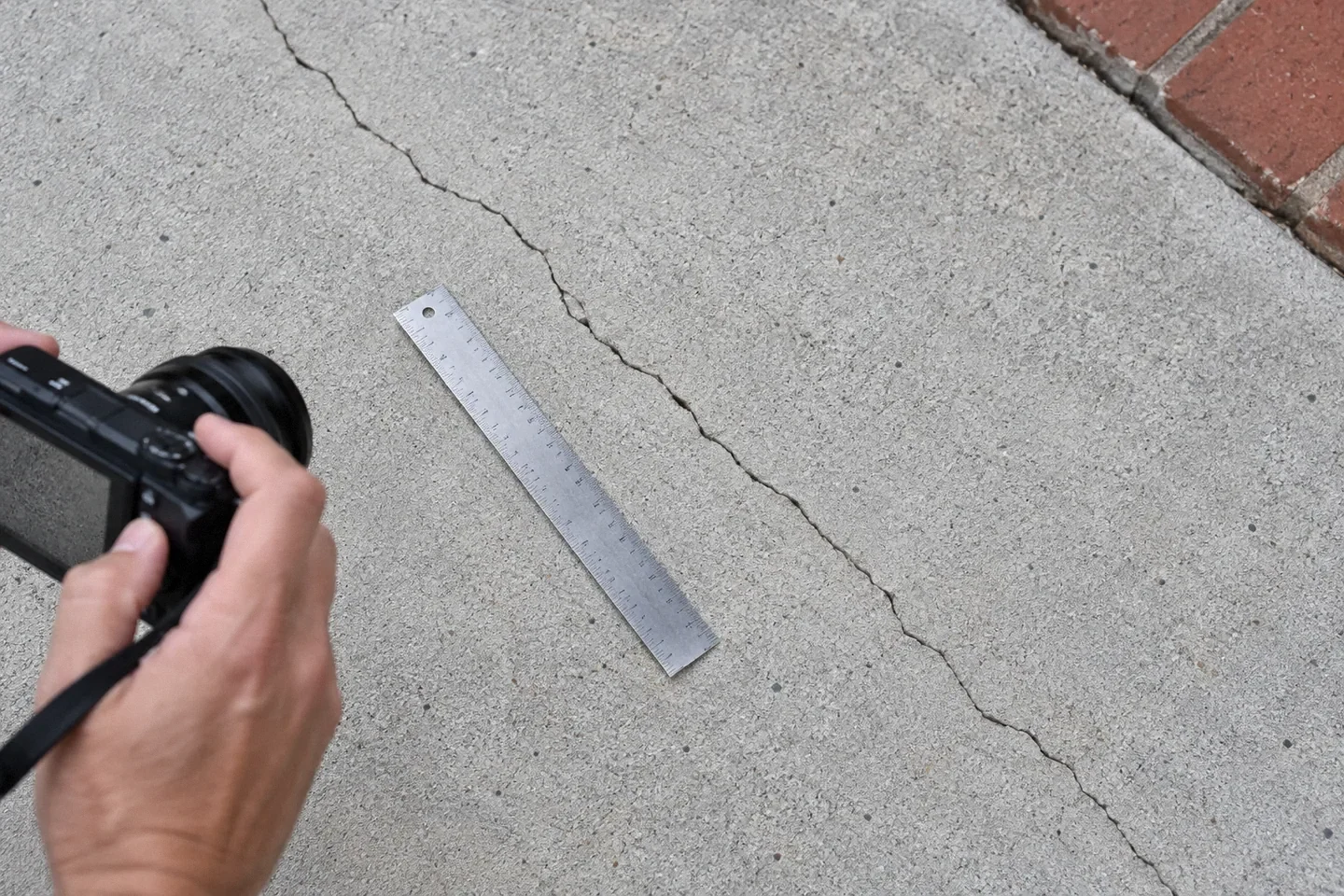
- Record the first appearance
- Check for height differences
- Agree on the repair objective
Reddit discussions identify questions; technical guidance comes from the linked primary sources. This article is not a site inspection or an engineered specification. How we research.
Start with a record, not a tube of filler
Finding a crack in a recently finished driveway is frustrating because the surface is supposed to be the finished result. The useful first response is to establish what has changed. Photograph the whole panel, the crack in relation to nearby joints, and a close view with a scale in the same plane as the surface. Save the original photographs with dates. A close photograph alone removes the context needed to understand whether the line starts at a corner, crosses a joint, follows a utility trench or occupies a low area.
In one Reddit discussion about a new slab, a homeowner considered drilling a hole at a crack tip to prevent further growth. That question captures an understandable impulse: do something immediately. The better sequence is to identify the condition and the purpose of a repair first. Forum comments cannot establish the depth of a crack or the support beneath a particular slab.
Separate three questions that often get mixed together
Ask whether the crack affects appearance, serviceability or the slab's load-carrying role. An appearance complaint might concern an irregular line across an otherwise usable patio. A serviceability problem could include a height difference, an edge that catches a wheel, or water taking an unwanted path. A structural question depends on the type of slab and what it supports. A driveway on ground and an elevated parking slab are not interchangeable examples.
NRMCA identifies several possible contributors to cracking, including movement, jointing, support conditions and construction practices. Its guidance does not turn one photograph into a diagnosis. See CIP 4, Cracking Concrete Surfaces. Use that range of mechanisms to organize questions, not to choose the explanation that best supports an argument with the installer.
A narrow-looking line can still deserve attention if the panels have shifted. Conversely, a visible crack does not automatically establish that replacement is necessary. Avoid treating a single number found online as a universal acceptance standard. The applicable specifications, use, exposure and actual condition matter, and a contractor or qualified evaluator should explain which criteria they are applying.
Build a small, useful observation file
Record when the concrete was placed and when the crack was first noticed. These may be different dates. Note whether the first observation followed rain, loading, removal of forms or cleaning. Include the weather as an observation if you know it, but distinguish remembered conditions from documented weather records. Write down where water went during an ordinary rain and whether the crack remained wet after surrounding areas dried.
Keep the proposal, approved drawings, change orders, delivery information available to you, and the installer's care instructions together. You do not need to reconstruct every construction detail yourself. The point is to avoid losing evidence that might answer a specific question later. If the contractor asks about the curing procedure, written instructions and dated messages are more useful than competing recollections.
Use this short inspection checklist without cutting or probing the concrete:
- Does the line begin at an inside corner, joint, post or change in slab shape?
- Is one side visibly higher, and does that condition change over time?
- Is the surrounding surface firm, or are pieces coming loose?
- Does water enter the line, collect nearby or run toward a building?
- Has normal use changed, such as a gate dragging or a wheel catching?
- Is the slab ordinary ground-supported flatwork, or does it support a structure?
Do not climb under an elevated slab or remove material to answer the last question. Plans or an appropriate site evaluation are the right next source of information.
What evidence changes the repair decision?
A stable cosmetic line calls for a different discussion than an opening that is progressing. A crack with sound edges offers different repair conditions from a crack surrounded by weak, detached material. Persistent pooling also changes the objective: making a line look better will not necessarily correct the surface elevations. These distinctions should appear in the contractor's explanation, rather than being compressed into the statement that concrete always cracks.
Ask the contractor to state the proposed repair objective in writing. Is it intended to reduce water entry, improve appearance, restore an edge, accommodate movement or address a support problem? Ask what it will look like after curing and whether it will remain visible when wet. Also ask what conditions would make the proposed treatment unsuitable. A credible scope can acknowledge a limitation without being an admission that the entire installation has failed.
A hypothetical comparison
Suppose two homeowners notice a line across a new patio. In the first hypothetical case, the photographs show no discernible change over several observations, there is no height difference, and drainage remains as planned. The conversation may focus on appearance, monitoring and the consequences of leaving or treating the line. No conclusion about structural adequacy follows solely from those observations, but the immediate concerns are specific.
In the second hypothetical case, a similar-looking line develops a height difference and water begins collecting along it. A decorative filler proposal does not answer those changes. The evaluator needs to consider movement and support, and the homeowner should ask how the repair would address them. The similarity in surface photographs does not make the two jobs equivalent.
Close the loop with a defined next action
Send the installer a concise record and request a site visit or written evaluation appropriate to the problem. Identify the effect you want resolved, rather than demanding a particular product before the condition is understood. Agree on when to review the observation record and which changes should trigger an earlier response. Preserve photographs taken before any repair. That leaves a useful baseline for deciding whether the treatment accomplished its stated purpose and keeps the discussion anchored to evidence rather than reassurance or alarm.
Related questions
Does a new crack prove the contractor failed?
A crack alone does not establish its cause or responsibility. Compare the observed condition with the project documents, placement records and an on-site assessment.
Should I fill the crack immediately?
First document it and identify whether it is moving or affecting drainage. An early cosmetic repair can hide useful evidence without addressing the reason it formed.
Research references
- primary · full
NRMCA CIP 4 - Cracking Concrete Surfaces - reddit · search-excerpt
Crack in newly poured concrete